

Reviews

Today in Hunterdon edition
Boxed out! Man’s device protects garden
Collapsible fence defends against crop-eating deer and rabbit
Fed up with the four-legged poachers who destroyed his carefully-cultivated vegetable crop overnight, Bob Hannigan gave up backyard gardening years ago – except for a few flower pots sprouting cherry tomatoes on the back porch of his Readington home.
Hannigan designed The Garden Defender — a collapsible, protective fencing system that will keep deer on the outside looking in while inside the enclosure. pepper and tomato plants, cucumbers. pole beans, zucchini and squash are able to blossom and bear fruit, growing to full maturity.
Hannigan pointed out several advantages — you know what’s going on in your backyard; you can grow completely organic if you choose, and refrain from chemicals and fertilizers. The challenge is to protect the plants from foraging deer.
Chicken wire and metal stakes weren’t the answer, either. Too ugly, and too prickly to be rolled up and rolled out again next spring when it was time for planting seedlings.
Hannigan concedes deer will continue to trek through his backyard, but is confident The Garden Defender will ensure this year’s crop is harvested and eaten by his family, not the deer.
Hannigan’s design features a series of interlocking 2-by-4 foot light green panels with steel frames and tight mesh screen. Each bottom joint has a flange and a hole for a stake to be driven through. All stakes have a feathered shaft that will keep the unit firmly in place, and its color blends with the environment.
Gardeners can start small, and add more panels if they want to expand their gardens, Hannigan said. The rigid construction is far superior to a chicken wire and steel stake enclosure; the two piece door panel sold with each unit also allows the gardener easy access for weeding and harvesting Hannigan said.
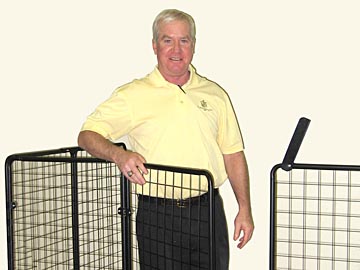
The garden defender as shown in a Philadelphia, Pa. warehouse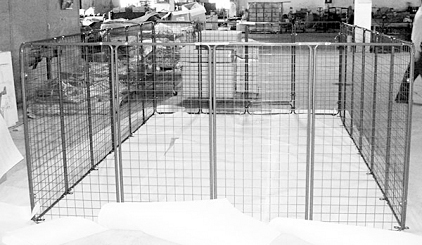
Deer can be persistent and stubborn, almost determined to bypass any fencing unit set up to keep them out, but Hannigan says that’s not likely with the enclosure system he designed; he says deer are reluctant to get themselves boxed in a small enclosure.
Hannigan says the units should last 10 years, and recommends they be disassembled and stored over the winter.

Readington man stakes claim as Garden Defender
There’s nothing warm and fuzzy about the Garden State deer population and other furry allies that use expensive landscaping as an all-night buffet. But there are peaceful alternatives to deer hunts and cullings. And, an entrepreneur from Readington is on the front lines, manufacturing a product that will help establish a peaceful border between the warring factions.
Bob Hannigan’s inspiration came from his own backyard vegetable garden, which was being ravaged by deer. “I had wire cones here and there, and tried other things, but they weren’t working,” he said. I started putting pots on the porch, but that’s no way to garden.”
So he put his professional experience as a sales rep for a packaging and display company into designing a modular fencing system that could be easily installed and adapted to different-sized gardens. Created primarily for the compact garden plots typically found in suburban back yards, the lightweight but sturdy Garden Defender fencing system can be installed in 30 minutes, creating a secure barrier that deer, rabbits, woodchucks and other hungry visitors can’t penetrate.
The design features a series of interlocking two-by-four-foot, light-green panels with steel frames and tight mesh screen. Each bottom joint has a flange and a hole for a stake to be driven through into the ground. All stakes have a feathered shaft that will keep the unit firmly in place, and its color blends with the environment.
The Garden Defender comes in two sizes, 8-by-10 feet; 8-by-12 feet, and two expansion kits; (each kit also comes with all the hardware needed to assemble the product). The modular design allows any number of different configurations. Gardeners can start small, and add more panels if they want to expand their gardens, This expansion ability, along with the two-way swinging door, are very attractive features that help The Garden Defender stand out in a competitive market. Hannigan concedes deer will continue to trek through his back yard, but is confident The Garden Defender will ensure this year’s crop is harvested and eaten by his family, not the deer.
New Anti-Deer Fence Invented By Gardener
Bob Hannigan shows off the easy-open gate on the fence system he invented. He claims his design is an easy, attractive way to keep deer and rabbits out of backyard gardens.
Mr. Hannigan says the idea came from his own experience with deer, rabbits and gardening in Hunterdon County. “You can grow vegetables and you can be successful for a month or month and a half, then in one night it’s all gone.”
“It takes about a half an hour to put together the first time,” he said, “it’s all very simple.”
Mr. Hannigan says that while you can get material from a hardware store for less money, “you can’t use it year after year, and this looks a lot nicer.”
In fact, aesthetic value was one of the things driving Mr. Hannigan to create The Garden Defender. His wife, apparently, did not think that sagging chicken wire nailed to posts went well with the landscaping. He decided that a more subtle light-green fence would help preserve their marriages as well as their tomatoes.
Because the fencing is bolted together and staked down, says Mr. Hannigan, deer or rabbits can’t move it. Although deer can leap a 4-foot fence, they are afraid to get trapped and usually avoid jumping into confined spaces.